
Across Australia, there is increasing pressure to manage stormwater more sustainably, reducing flood risk, improving water quality and protecting downstream environments.
As urbanisation intensifies and traditional discharge points become constrained, infiltration presents a practical and scalable solution. Where site conditions allow, permeable soils can provide an effective pathway for managing stormwater at its source, reducing peak flows, supporting groundwater recharge and enhancing overall catchment performance.
HydroCon permeable concrete pipes allow water to exfiltrate through the porous pipe walls into surrounding media while sediments and pollutants are retained within the pipe, enabling easy maintenance. They have been implemented in stormwater infiltration projects across Australia for more than 20 years.
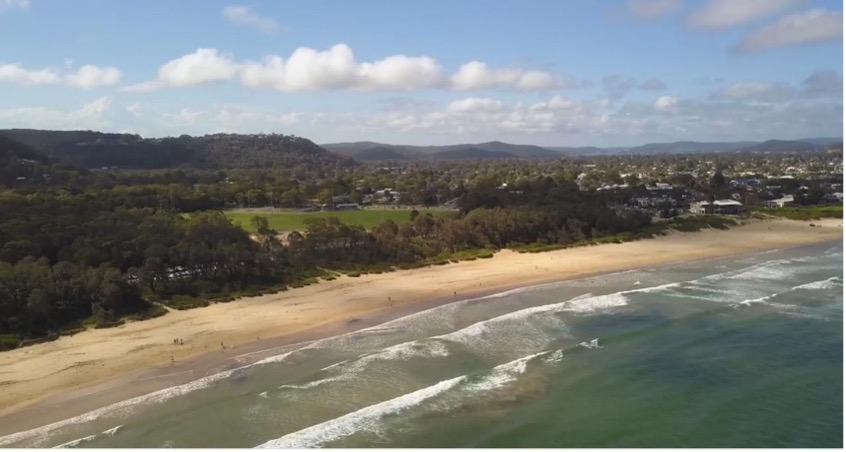
Umina Beach, Central Coast NSW
When Central Coast Council redeveloped the skate park and surrounding carpark at Umina Beach in 2023, the project required more than a surface upgrade. The existing drainage system was undersized, prone to blockage and resulted in persistent surface ponding after storm events.
With limited pavement falls, downstream network constraints and restrictions on ocean discharge, a source-controlled infiltration system was the only feasible long-term solution.
The Challenge
The site presented several constraints:
- Persistent nuisance flooding caused by trapped low point
- Very limited pavement falls
- Existing downstream network limitations
- Environmental restrictions on ocean discharge
- High-intensity rainfall events typical of coastal NSW
The Integrated Solution
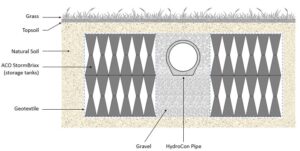
The final design combined two complementary systems – HydroCon permeable concrete pipes for primary stormwater treatment and subsurface distribution and ACO StormBrixx geocellular tanks for underground storage and controlled infiltration.
This configuration is recognised as the first project in Australia to integrate HydroCon permeable pipes with StormBrixx tanks in a single engineered system.
Upstream Treatment with HydroCon Pipes
HydroCon permeable concrete pipes are manufactured from a no-fines concrete mix and are fully porous around their entire circumference. As stormwater flows through the pipe:
- Sediment settles within the pipe
- Gross pollutants are retained
- Oils, hydrocarbons and nutrient-bound particles are filtered
- Treated water exfiltrates through the pipe wall into surrounding media
By treating runoff before it enters the storage system, the pipes protect downstream infiltration capacity and reduce long-term maintenance risk. Access pits allow inspection, jetting and vacuum cleaning when required.
Underground Storage and Infiltration
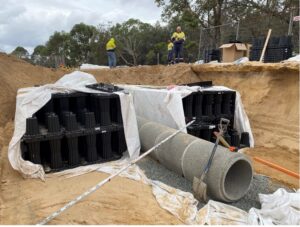
Following upstream treatment with HydroCon pipes, water enters the ACO StormBrixx tanks, providing approximately 266m³ of storage (designed for a 1-in-5-year storm event). The system temporarily detains peak flows before gradually infiltrating into the sandy subsoil as groundwater levels recede.
This approach reduces surface flooding while avoiding additional burden on the downstream stormwater network.
Project Outcomes
The completed system delivers measurable benefits:
- Reduced flooding risk across the carpark
- Improved stormwater quality through source control treatment
- Sustainable groundwater recharge
- Protection of coastal receiving environments
- A maintainable, long-life underground asset
The Umina Beach installation highlights how HydroCon permeable concrete pipes can deliver durable stormwater infrastructure in coastal conditions, combining structural performance with infiltration and treatment to support sustainable asset outcomes and protect downstream waterways.
For councils and engineers seeking resilient, WSUD-aligned stormwater solutions, treating water at the point of collection is proving to be both practical and sustainable.
Learn More About This Project